W3cubDocs
/Next.jstemplate.js
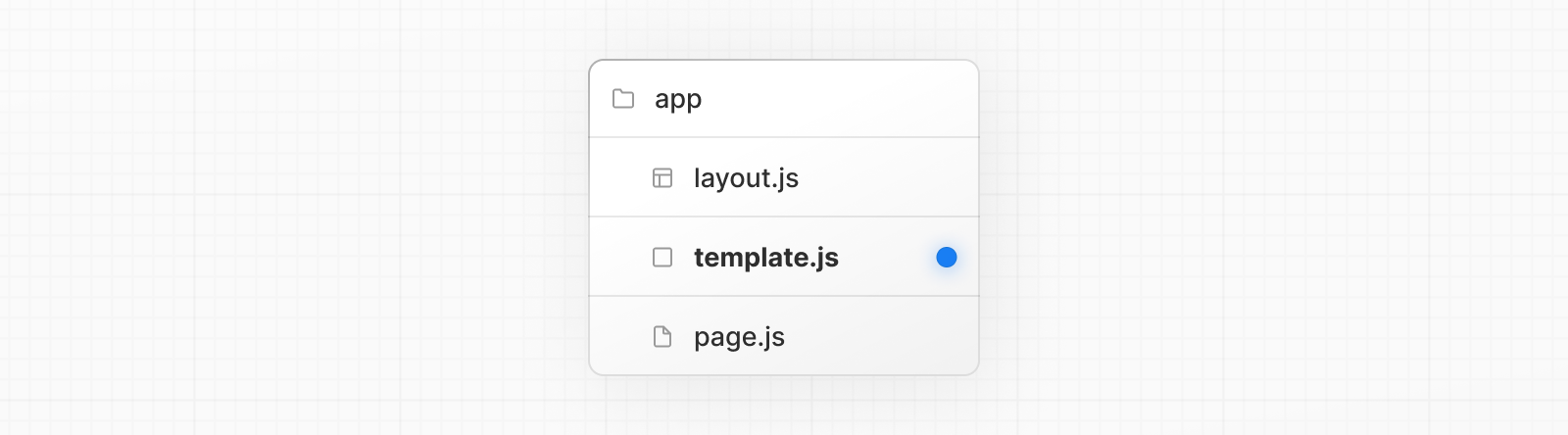
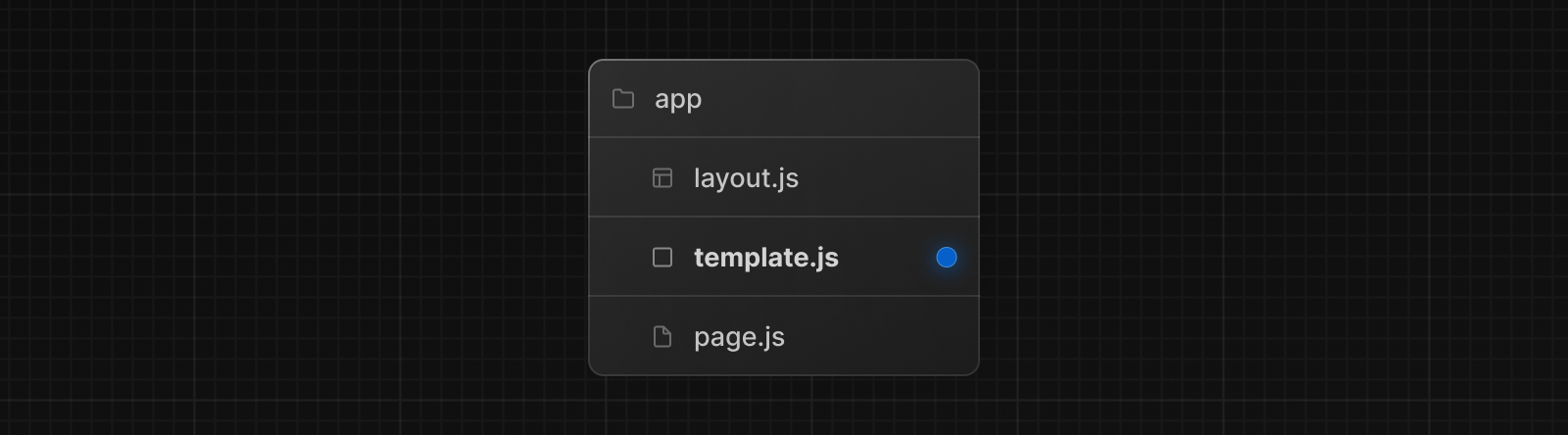
A template file is similar to a layout in that it wraps each child layout or page. Unlike layouts that persist across routes and maintain state, templates create a new instance for each of their children on navigation.
export default function Template({ children }: { children: React.ReactNode }) {
  return <div>{children}</div>
}
While less common, you might choose a template over a layout if you want:
- Features that rely on
useEffect(e.g logging page views) anduseState(e.g a per-page feedback form). - To change the default framework behavior. For example, Suspense Boundaries inside layouts only show the fallback the first time the Layout is loaded and not when switching pages. For templates, the fallback is shown on each navigation.
Props
children (required)
Template components should accept and use a children prop. template is rendered between a layout and its children. For example:
<Layout>
  {/* Note that the template is given a unique key. */}
  <Template key={routeParam}>{children}</Template>
</Layout>
Good to know:
- By default,
templateis a Server Component, but can also be used as a Client Component through the"use client"directive.- When a user navigates between routes that share a
template, a new instance of the component is mounted, DOM elements are recreated, state is not preserved, and effects are re-synchronized.
Version History
| Version | Changes |
|---|---|
v13.0.0 |
template introduced. |
© 2024 Vercel, Inc.
Licensed under the MIT License.
https://nextjs.org/docs/app/api-reference/file-conventions/template